BY KARIM SADJADPOUR | JUNE 15, 2011
http://www.foreignpolicy.com/articles/2011/06/15/the_cynical_dairy_farmer_s_guide_to_the_new_middle_east?page=full
In the early years of the Cold War, in an effort to simplify -- and parody -- various political ideologies and philosophies, irreverent wits, in the spirit of George Orwell, went back to the farm. No one really knows how the two-cow joke known as "Parable of the Isms" came about, but most students of Political Science 101 have likely come across some variation of the following definitions:
Socialism: You have two cows. The government takes one of them and gives it to your neighbor.
Communism: You have two cows. The government takes them both and provides you with milk.
Nazism: You have two cows. The government shoots you and takes the cows.
Capitalism: You have two cows. You sell one and buy a bull.
Over the years, the parables gradually expanded, using the two-cow joke to explain everything from French unions (You have two cows. You go on strike because you want three cows.) to the Republican Party (You have two cows. Your neighbor has none. So what?). While in its original iteration the cows were a metaphor for currency, capital, and property, they later began to take on different meanings.
Today, the Middle East has replaced the Cold War as America's primary foreign-policy preoccupation. As opposed to the seemingly ideologically homogenous communist bloc, however, the 22 diverse countries that compose the modern Middle East are still confusing to most Americans. Why can't the Israeli and Palestinians stop fighting already? What's the difference between Libya and Lebanon again?
Herewith then is a satirical effort to simplify the essence of Middle Eastern governments so that, in the immortal words of George W. Bush, "the boys in Lubbock" can read it. And, rather than symbolizing property, the cows here symbolize people, which -- funny enough -- is how most Middle Eastern regimes have traditionally viewed their populations.
Saudi Arabia
You have two cows with endless reserves of milk. Gorge them with grass, prevent them from interacting with bulls, and import South Asians to milk them.
Iran
You have two cows. You interrogate them until they concede they are Zionist agents. You send their milk to southern Lebanon and Gaza, or render it into highly enriched cream. International sanctions prevent your milk from being bought on the open market.
Syria
You have five cows, one of whom is an Alawite. Feed the Alawite cow well; beat the non-Alawite cows. Use the milk to finance your wife's shopping sprees in London.
Lebanon
You have two cows. Syria claims ownership over them. You take them abroad and start successful cattle farms in Africa, Australia, and Latin America. You send the proceeds back home so your relatives can afford cosmetic surgery and Mercedes-Benzes.
Hezbollah
You have no cows. During breaks from milking on the teat of the Iranian cow you call for Israel's annihilation.
Iraq
You have three cows: one Sunni, one Shiite, and one Kurd. The first is milked by Saudi Arabia, the second by Iran, and the third smuggles its milk abroad. The United States picks up the manure.
Bahrain
You have three cows: two Shiites and one Sunni. Invite Saudi Arabia to come kill a Shiite cow and import another Sunni cow.
Yemen
You have two cows. Feed them khat instead of grass and neglect to milk them. Watch them fight each other.
Hosni Mubarak's Egypt
You have 10 cows. Neglect to tend to them, but prevent them from fighting Israel in order to get milk from America.
Post-Mubarak Egypt
You have 10 cows who think they now own the farm. There's still no milk.
Zine el-Abidine Ben Ali's Tunisia
You have two cows. Beat them regularly and use the milk money for your wife's shopping sprees in Paris. When the cows revolt, retire to Saudi Arabia.
Post-Ben Ali Tunisia
See post-Mubarak Egypt.
Libya
You have two cows. You wish they were camels. Feed them only your words of wisdom and kill them if they dare moo.
Turkey
You have two cows and one sheep. You claim that the sheep is really a "mountain cow."
Qatar
You have one cow that has hundreds of udders. You use the limitless milk money to set up a television channel that broadcasts the other cows in the region being milked (except Saudi Arabia's).
United Arab Emirates
You have two cows. You bring in Filipino nannies, South Asian laborers, and Russian prostitutes to make sure they're well taken care of. Sell the milk to build the world's biggest shopping mall.
Jordan
You have one cow, surrounded by wolves. Pretend that it's a magic cow that has the power to pacify wild animals, and then ask America for milk.
Palestine
You had two cows that were lost decades ago. Lament them.
Israel
You have two bulls. Pretend they are helpless calves.
Friday, June 24, 2011


How a couple of cows explain a changing region: equal opportunity offender edition.
BY KARIM SADJADPOUR | JUNE 15, 2011
http://www.foreignpolicy.com/articles/2011/06/15/the_cynical_dairy_farmer_s_guide_to_the_new_middle_east?page=full
In the early years of the Cold War, in an effort to simplify -- and parody -- various political ideologies and philosophies, irreverent wits, in the spirit of George Orwell, went back to the farm. No one really knows how the two-cow joke known as "Parable of the Isms" came about, but most students of Political Science 101 have likely come across some variation of the following definitions:
Socialism: You have two cows. The government takes one of them and gives it to your neighbor.
Communism: You have two cows. The government takes them both and provides you with milk.
Nazism: You have two cows. The government shoots you and takes the cows.
Capitalism: You have two cows. You sell one and buy a bull.
Over the years, the parables gradually expanded, using the two-cow joke to explain everything from French unions (You have two cows. You go on strike because you want three cows.) to the Republican Party (You have two cows. Your neighbor has none. So what?). While in its original iteration the cows were a metaphor for currency, capital, and property, they later began to take on different meanings.
Today, the Middle East has replaced the Cold War as America's primary foreign-policy preoccupation. As opposed to the seemingly ideologically homogenous communist bloc, however, the 22 diverse countries that compose the modern Middle East are still confusing to most Americans. Why can't the Israeli and Palestinians stop fighting already? What's the difference between Libya and Lebanon again?
Herewith then is a satirical effort to simplify the essence of Middle Eastern governments so that, in the immortal words of George W. Bush, "the boys in Lubbock" can read it. And, rather than symbolizing property, the cows here symbolize people, which -- funny enough -- is how most Middle Eastern regimes have traditionally viewed their populations.
Saudi Arabia
You have two cows with endless reserves of milk. Gorge them with grass, prevent them from interacting with bulls, and import South Asians to milk them.
Iran
You have two cows. You interrogate them until they concede they are Zionist agents. You send their milk to southern Lebanon and Gaza, or render it into highly enriched cream. International sanctions prevent your milk from being bought on the open market.
Syria
You have five cows, one of whom is an Alawite. Feed the Alawite cow well; beat the non-Alawite cows. Use the milk to finance your wife's shopping sprees in London.
Lebanon
You have two cows. Syria claims ownership over them. You take them abroad and start successful cattle farms in Africa, Australia, and Latin America. You send the proceeds back home so your relatives can afford cosmetic surgery and Mercedes-Benzes.
Hezbollah
You have no cows. During breaks from milking on the teat of the Iranian cow you call for Israel's annihilation.
Iraq
You have three cows: one Sunni, one Shiite, and one Kurd. The first is milked by Saudi Arabia, the second by Iran, and the third smuggles its milk abroad. The United States picks up the manure.
Bahrain
You have three cows: two Shiites and one Sunni. Invite Saudi Arabia to come kill a Shiite cow and import another Sunni cow.
Yemen
You have two cows. Feed them khat instead of grass and neglect to milk them. Watch them fight each other.
Hosni Mubarak's Egypt
You have 10 cows. Neglect to tend to them, but prevent them from fighting Israel in order to get milk from America.
Post-Mubarak Egypt
You have 10 cows who think they now own the farm. There's still no milk.
Zine el-Abidine Ben Ali's Tunisia
You have two cows. Beat them regularly and use the milk money for your wife's shopping sprees in Paris. When the cows revolt, retire to Saudi Arabia.
Post-Ben Ali Tunisia
See post-Mubarak Egypt.
Libya
You have two cows. You wish they were camels. Feed them only your words of wisdom and kill them if they dare moo.
Turkey
You have two cows and one sheep. You claim that the sheep is really a "mountain cow."
Qatar
You have one cow that has hundreds of udders. You use the limitless milk money to set up a television channel that broadcasts the other cows in the region being milked (except Saudi Arabia's).
United Arab Emirates
You have two cows. You bring in Filipino nannies, South Asian laborers, and Russian prostitutes to make sure they're well taken care of. Sell the milk to build the world's biggest shopping mall.
Jordan
You have one cow, surrounded by wolves. Pretend that it's a magic cow that has the power to pacify wild animals, and then ask America for milk.
Palestine
You had two cows that were lost decades ago. Lament them.
Israel
You have two bulls. Pretend they are helpless calves.
Monday, June 06, 2011
India health costs a crisis impoverishing millions
Source: K Daigle, Associated Press, 5 June 2011
When Nasir Khan cried out at night from the searing pain of kidney stones, the entire slum could hear him.
A magic healer promised an inexpensive cure through chanting while pinching his side where the kidney stones were lodged, but it only made it worse. His condition became life-threatening, and doctors said he would need surgery for a fourth time.
The operation cost him - and his extended family - their home.
Without insurance and unable to get a loan, they sold the broken brick shack in the industrial north Indian city of Aligarh for 250,000 rupees, or about $5,500. It had been home to the 35-year-old Khan, his four brothers, three wives and 11 children.
"There is no choice. It is my life," Khan said in gasps, writhing atop a crude wooden cot as his relatives hovered helplessly nearby.
He screamed for his mother. He screamed for Allah. He screamed for anyone to deliver him from the pain.
His story is repeated so often across India it evokes little sympathy, yet it represents one of the biggest threats to India's battle to lift its poor up from squalor.
Each year, the cost of health care pushes some 39 million people back into poverty, according to a study published in the Lancet medical journal. Patients shoulder up to 80 percent of India's medical costs. Their share averages about $66 (3,000 rupees) annually per person - a crippling sum for the 800 million or so Indians living on less than $2 a day.
A diagnosis of asthma, a broken leg or a complicated childbirth can mean having to choose between medicine or food, spending on treatment or relying on prayer.
"We are too poor," Khan's uncle Bhuere Khan said. His aunt Rafiquan Mohammed offered another justification for selling the house, as if one were needed: "He has to live. He has small children."
While India boasts an economic growth rate near 9 percent, the wealth has done little to help millions burdened by poverty and disease. The poor, aside from struggling to afford care, also face extreme shortages of doctors and medicines.
The situation is particularly dire in rural areas, where more than 70 percent of the country's 1.2 billion people live. Some desperate patients resort to seeing quacks. Others pay bribes. Many simply don't seek help until it is too late.
The World Bank and other experts have warned that failure to address the country's health care woes could take a toll on long-term growth - especially as two-thirds of the population is under 35 and would form the backbone of India's work force for decades.
Yet India's government spends comparatively little on health care: just 1.1 percent of the country's GDP, a figure that hasn't changed much since 2006 when China was spending 1.9 percent; Russia, 3.3 percent and Brazil, 3.5 percent, according to World Health Organization figures.
"The political will is simply not there yet. We have to help realign the country's priorities," said Dr. K. Srinath Reddy, president of the Public Health Foundation of India and part of a government-commissioned committee recommending reforms.
Statistics that might highlight areas of need are scarce, thanks to erratic case reporting, few autopsies and a tradition of quick cremation that destroys evidence of disease. WHO reports often leave India out for lack of data. A recent study in the Lancet suggests malaria deaths could be 10 times higher than estimated.
India, which says hospital costs impoverish a quarter of all patients, has vowed to raise spending on health to 3 percent of GDP by 2015 and provide universal primary health care - but it's an unfilled promise that's been made before.
The Lancet, in a series on India in January, urged the government to double its pledge to 6 percent by 2020 or jeopardize its ability to shake off poverty.
"What is the point of economic success if there is nothing in it for the population?" Lancet editor Richard Horton said.
"In a short amount of time you can do a lot - if you have the right leadership, the right administration and the public will. India has the people and it has the funds. We'll see if they can do it."
Meanwhile, India boasts a thriving medical tourism industry with shiny private clinics luring tens of thousands of foreigners for everything from bargain tummy tucks to experimental stem-cell treatments in an industry estimated to be worth nearly 100 billion rupees ($2.3 billion).
The pharmaceutical industry is making lifesaving drugs at cut-rate costs, private hospitals are pioneering advances in open-heart surgery and medical schools are churning out physicians eager to work in the West.
For most Indians, however, this is happening in another world.
Uttar Pradesh, one of India's poorest states and home to the padlock-manufacturing city of Aligarh, is a land of barren rural landscapes pocked by crumbling mud huts, wandering cattle and roadside shacks selling potato chips and curry.
Its infant mortality rate - 96 of every 1,000 newborns die - makes it one of the worst places on Earth to be born. The average Indian rate is better at 63 but still grim compared with China's 15 deaths out of every 1,000 births.
The state's leader, Mayawati, who uses only one name, rose from India's lowest caste to power and prominence. She calls health care a top priority. Yet since taking office in 2007 she has spent just $224 million on medicines for the state's 195 million people, while spending $569 million to build memorial parks and statues of leading dalits - also known as untouchables - such as herself.
In rural India, the poor often have to walk kilometers (miles) to reach a clinic, with no guarantee of finding a doctor or the medicine they need. On any given day, at least 40 percent of government doctors are absent - often busy moonlighting for higher pay at private clinics.
Drug supplies are also erratic; last year, India was short 35 million vaccine doses for diphtheria and 30 million for tetanus, a Health Ministry report said.
Many patients simply rely on traditional holistic medicine approaches such as ayurveda, or seek help from quacks, who have become so common the government uses them as information sources on everything from environmental contamination to polio outbreaks.
They advertise in graffiti scrawled across roadside buildings in rural Uttar Pradesh, promising treatments for venereal disease, erectile dysfunction, urinary tract infections - and charging according to what patients can pay.
Cities such as Aligarh, a three-hour drive east of New Delhi over potholed roads, are somewhat better off. They have hospitals, doctors and drugs - though often in short supply.
The government says the nation needs tens of thousands of clinics and 700,000 more doctors.
At Aligarh's Mohan Lal Gautam District Women's Hospital, dozens of women line up each day for a free sterilization procedure that will spare them the risk and cost of having and raising another child.
"It is too much," said 32-year-old Pinky Devi, the frail wife of a rice farmer who said she paid about 20,000 rupees ($450) to have her second daughter in a hospital. "I want to educate my children well. I want a good life. That is why I am here."
The state hospital has only three doctors, who race each day through seeing some 500 patients giving birth, needing operations or seeking treatment for pelvic inflammatory disease and other conditions at subsidized costs.
There are 10 vacancies for doctors, but it is all but impossible to find practitioners who will work for 20,000 rupees (about $450) a month when they can make at least double at a private clinic, Chief Medical Officer Dr. Poonam Sharma said.
"We cannot give the patients good treatment," she said. "They won't get the quality time, most maybe just three minutes." More than half of Aligarh's babies are still born at home, often in unsanitary conditions, Sharma said.
The medical community, eager to increase its numbers, has debated ideas such as training ayurveda or yoga practitioners to give basic care, offering bonuses for working in remote areas and recruiting from Africa.
In the meantime, private health care is booming, with clinics and insurance schemes multiplying and driving up costs.
There are piecemeal efforts to help: a national mission launched in 2005 to improve rural care, and some states offering to cover hospital bills for the poorest.
But patients like Ibne Hasan, diagnosed with HIV two years ago, say they have seen no such benefits.
Once employed in the packaging department at Aligarh's lock factory, 35-year-old Hasan has had to sell his two slum plots and all of his belongings save a threadbare armchair, a few tin pots, a worn mattress and a tiny room he shares with his wife and two children. The money has long been spent.
They are shunned by friends and neighbors. With no electricity or stove, they survive on food Hasan's wife brings from her housekeeping work, and use her monthly 1,100 rupee ($25) wage on AIDS drugs for Hasan and asthma medication for their 5-year-old son, who is far too small for his age and may also have HIV.
"When we can, we buy medicine. I haven't gotten one rupee in treatment," Hasan said, as the listless little boy huddled in the room. Laughing children threw pebbles at the shack from outside. "They make all these promises, but they are only promises. I have seen nothing."
Thursday, April 21, 2011
My Father's European Vacation
I realised that I never posted the pics of my dad's trip to Europe. It was actually great having him to myself for a whole week and getting to show him some new places.
The pics are here:
The pics are here:
 |
| Dad's Trip to Europe |
Tuesday, April 19, 2011
Playing tourist in Nepal
So on my current work trip to Nepal, I actually managed to take a bit of time and see some of the sites.
I took a day trip to Bhaktapur and Nagarkot, and even flew to Pokhara for the weekend. Something that I didn't get to do that I hope I can come back someday for is trekking in the foothills of the Himalayas - anyone want to come!? :-)
Click here to see the pics:
I took a day trip to Bhaktapur and Nagarkot, and even flew to Pokhara for the weekend. Something that I didn't get to do that I hope I can come back someday for is trekking in the foothills of the Himalayas - anyone want to come!? :-)
Click here to see the pics:
 |
| My Last Trip to Nepal |
Wednesday, March 30, 2011
GO FOR IT ANYWAY
(Stolen from someone else) Can you imagine not doing what you're doing in your life right now, but doing something completely different? Something exciting, fun, even risky, like quitting your job and traveling around the world. Or working part-time and going to school full time to study scuba diving or basket weaving. Or owning your own home, business, plane or boat. If you can imagine it, why aren't you doing it? I'll tell you why. Because the moment you think about it, you think about all the reasons you can't. "How will I pay my bills?" "Who will take care of my family?" "Where will I get money?" "What will people say?" Well, here's another question for you, How do you ever expect to be happy or at peace if you stay where you are? If you don't allow yourself to dream, to dare, to move up, out, forward: how will you ever know what you are really capable of? Look at it this way, what's the worse that can happen? You could end up right where you started, doing exactly what you are doing. Oh, what the heck, go for it anyway.
Tuesday, March 15, 2011
Sometimes charity workers
need to let off some steam.
http://andresomar.blogspot.com/2011/03/sometimes-charity-workers.html
Monday, February 07, 2011
Can You Call Yourself X if You've Never Y'd?
Author: Cory Silverberg
Source: About.com, 7 February 2011
Last week I received this email question from a reader: do you suppose it is proper for someone to label themselves bi-sexual if they've never had sex?
It's an interesting question, which feels like several interesting questions in disguise. Here's how I responded.
My instinct is to start answering your question by noticing the different questions that seem to be lurking underneath it. I read at least three questions here:
1.What's the connection between sexual orientation and sexual activity? Can you call yourself X if you haven't Y'd?
2.What are the defining features of sexual orientation? That is, in this case, what makes a bi-sexual a bi-sexual?
3.Who gets to call themselves what? Or in your words, when is it proper to call yourself something?
Let's start with your first question first. There isn't a precise or clear relationship between sexual orientation (here: bisexuality) and sexual activities (which I want to define as whether or not someone has engaged in any activity they or their partner consider to be sex). Having sex, whatever that looks like, doesn't make us anything. It's a behavior one engages in. So the short answer to your question is that someone might call themselves bisexual whether or not they've had sex with anyone.
Sexual orientation may have many definitions (see below) but it isn't the same thing as sexual activity. The distinction to be made here is that sexual activities are what you do, and sexual orientation describes who you want to do things with. Of course we might describe the "who" in any number of ways. Sexual orientation focuses only on gender. Which brings us to your second question. What defines sexual orientation?
First let's consider the word. Sexual orientation originally referred to how one positioned oneself in terms of a sexual goal (which might have been something you wanted to try, someone you wanted to be with, some way you wanted to be known).
In this way we each had our own unique sexual orientation to others and to the world. The way we use sexual orientation today comes from a medical model or approach to sexuality.
This approach is the one favored by most sex educators, researchers, medical doctors, and an ever growing army of sex pundits. The medical model relies on the understanding of sexuality as something we can measure, and know, and evaluate objectively. In this model individuals may have their own interests, but we can all be categorized and defined using labels that apply to everyone. The essential falsehood about these labels is that they are objective or scientific. They are, of course, as value laden and tied to things like race, class, and culture, as anything else. Sexual orientation is just another label.
Sexual orientation today is used to categorize people based on the gender of the people they are primarily sexually attracted to. The defining characteristic of sexual orientation is not what someone does sexually, or wants to do sexually, nor is it what they call themselves, it is solely a reflection of their identified gender and the gender of the people they are most interested in being sexual with.
For someone to be considered bi-sexual by the powers that be, all they need is to be someone who is sexually attracted to people who identify as men and women. This brings us to the last question, which is really about whether or not we want to let the powers that be define these things for us in the first place.
Who Gets to Call Themselves What?
The way you asked this question "is it proper" for someone to call themselves something may read at first like a question of fact. Maybe even a scientific question. But it's neither. The question you're asking, which is an excellent one, is philosophical, moral, and ethical (more how do I feel about eating meat? than do seat belts save lives?).
It's a question most people don't bother to ask themselves, but I believe we'd be better off if everyone did, because it's a question we all need to decide for ourselves.
Annoying as it is, I want to answer your question with one of my own: do you believe people have the right to identify themselves in ways that fit them as individuals?
In this context, does someone have the right to call themselves bi-sexual because that's how they identify themselves or that's who they feel themselves to be? Or do you think they need "proof" of their orientation? Do they need someone else, a professional, who applies a label based on definitions developed for everyone?
If you prefer the latter option, you have to ask yourself what proof would satisfy you? And should you, or anyone else, be in a position to demand such proof in the first place?
What does it mean to give any individual, organization, or government the power to tell us who we are? I know these questions may not seem nearly as fun as trying to figure out which celebrity or which one of your friends is "really gay" but if you're interested in treating others like people, and not stereotypes, these are the questions you need to ask yourself.
For what it's worth, my own belief is that people must be given the opportunity and respect of identifying themselves, regardless of whether or not they fit into the checkboxes established by others.
To do otherwise is to deny a person's basic human rights. Taking this position isn't always easy. People can identify in ways that, while not exactly infringing on the rights of others, can make it more difficult for others to access their own basic rights. But the alternative, which is to subscribe to a medical model that defines everything for us, is not an option for me.
I would much rather deal with the complicated responses that grow out of treating people with respect and honoring basic rights, than the silence that follows yet another labeling of someone else's identity.
Despite everything you may have been taught, the choice is yours.
Friday, January 21, 2011
Backblog: European vacation 2010
So after putting up my winter vacation pictures, I realised that I never put up my summer ones. And that is just not cool.
Having a July birthday means that I must take a vacation every summer, lucky for me last year it coincided with the International AIDS Conference in Vienna, and since I had never been to that part of the world (for the most part) I decided to make it into an exploratory trip into Central/Eastern Europe – a part of Europe I have always been afraid to visit (let’s be honest their history with the ‘melanin-endowed’ has been less than stellar).
Even luckier for me Prasad was willing to come along (as if he would ever pass up the chance at a trip).
We ended up cramming 5 cities (Vienna, Bratislava, Salzburg, Prague, Budapest) in 4 countries (Austria, Slovakia, Czech Republic, Hungary) over 10 days. It was daunting, but it proved doable thanks mostly to the fact that Europe is tiny and everything is close by, everything is accessible by trains, and we were not too ambitions in what we actually hope to accomplish in our limited time in each city.
Highlights included:
• Spending quality time with Prasad
• Meeting Chris and Brian
• Classical concert in Salzburg
• Travelling by train during the day to see the country side rolling by
• Catching-up with Wanja, Kent, & Qasim in Vienna, and Neil in Prague
• Budapest as a whole
• Sacher Torte! (you must say it with a Teutonic accent)
 |
| European Vacation 2010 |
Saturday, January 08, 2011
Indonesia 2010
This winter in my attempt to escape the dreary grey that is London I headed to Indonesia with Michael and Peanut. Those of you who read my rants on Facebook, know what a painful process it was to actually reach my destination. Alas, once I did touch down on the humid land mass that is the world's most populous Muslim country.
I unfortunately missed on Jakarta, due to my travel dramas, but Yogyakarta, Bali, and Lombok did await.
Michael and I had a great time discovering a country that both of us have been eager to visit. And though Bali left a lot to be desired, Lombok was an absolute paradise (one which will surely be lost once the new international airport opens up in 2012).
Highlights of the trip include exploring Borobudur and Prambanan temples (and we know how much Peanut loves old temples). Exploring Ubud in Bali. And the beaches of Lombok.
The seafood was sublime, the beer cold and the company most excellent.
And though I would not go during the rainy season again (when Bali says rain, they really mean it - no monsoon I have ever been through can compare); next time I would skip Java and Bali go straight to Lombok and continue exploring east.
Here are a few pics if you are interested:
Now I need to figure out where to go next, before my suntan fades!
I unfortunately missed on Jakarta, due to my travel dramas, but Yogyakarta, Bali, and Lombok did await.
Michael and I had a great time discovering a country that both of us have been eager to visit. And though Bali left a lot to be desired, Lombok was an absolute paradise (one which will surely be lost once the new international airport opens up in 2012).
Highlights of the trip include exploring Borobudur and Prambanan temples (and we know how much Peanut loves old temples). Exploring Ubud in Bali. And the beaches of Lombok.
The seafood was sublime, the beer cold and the company most excellent.
And though I would not go during the rainy season again (when Bali says rain, they really mean it - no monsoon I have ever been through can compare); next time I would skip Java and Bali go straight to Lombok and continue exploring east.
Here are a few pics if you are interested:
 |
| Indonesian Vacation 2010 |
Now I need to figure out where to go next, before my suntan fades!
Thursday, September 23, 2010
Penile hygiene-Everything you didn’t know about the hygiene practices of fishermen in Kisumu, Kenya
Genital hygiene practices of fishermen targeted for a topical microbicide intervention against sexually transmitted infections in Kisumu, Kenya
Kwena ZA, Bukusi EA, Gorbach P, Sharma A, Sang NM, Holmes KK. Int J STD AIDS. 2010;21:435-40.
Research on hygiene has been relatively limited in the current era of rigorous observational studies and clinical trials. Kwena and colleagues set out to investigate the perception and practices of genital hygiene among fishermen working on the beaches along Lake Victoria, targeted for a topical male microbicide hygiene intervention. They conducted 12 focus group discussions involving fishermen (n = 130), recording the discussions in Dholuo (the local language) and transcribing them verbatim before translating into English. Transcripts were double-coded and analysed using constant comparative analysis. Despite easy access to lake water and recognition of a link that may exist between poor genital hygiene and the risk of penile infection and poor sexual relationships, few fishermen regularly washed their genitalia due to fear/embarrassment from cleaning their genitalia in public, traditional Luo beliefs such as that washing with soap would reduce the fish catch, lack of time because of their busy schedules, laziness and lack of responsibility, and excessive consumption of alcohol and illicit drugs. Hygiene practices of the fishermen were poor and could contribute to genital infections including sexually transmitted infections. Given the fishermen's poor genital hygiene practices, they may benefit from hygiene intervention, including that provided by penile microbicides, which can be applied in the privacy of their bedrooms.
For abstract click here: http://www.ncbi.nlm.nih.gov/pubmed/20606226
Editors’ note: This qualitative study among primarily Luo fishermen at 32 beaches along Lake Victoria is an example of ‘formative research’. A variety of methodologies can be used in formative research to better understand the behaviours, attitudes, and practices of a population in which a trial is to be conducted. Formative research can also help discover how best to reach priority populations at the stage of programme design. The focus here is on understanding the poor hygiene practices of uncircumcised fishermen in preparation for a topical penile wipe intervention. One of the more striking beliefs that emerged in the focus groups was that the vagina cleans the penis. Another finding was that women are less likely to comment about a man’s poor hygiene if it is a transactional sexual relationship, such as when a woman receives free fish or fish at a reduced price. The idea of a penile wipe is not new – military forces with limited access to water in combat zones in both World War I and II used a penile microbicide to reduce the risk of sexually transmitted infections. Despite the fact that the water of Lake Victoria is all around, lack of privacy may be the most important reason that the penile wipe concept would be attractive to uncircumcised men.
Monday, September 20, 2010
Walk All Over Poverty
Please sponsor me for CARE International's 25km walk, with monies raise going towards our vital Rapid Response Fund that enables us to be amongst the first to respond when emergencies strike.
http://original.justgiving.com/andyoms
http://original.justgiving.com/andyoms
Saturday, September 18, 2010
Galapagos - Part 4
Slowly but surely I am trying to put up my Galapagos pics. This is the last set from San Cristobal.


 Turtle Poop!! :-D


 Turtle Poop!! :-D


Wednesday, September 08, 2010
Fundraising Walkathon - Please Give Generously
http://original.justgiving.com/andyoms
I am participating in the CARE International UK's Walkathon in order to raise funds for the Rapid Response Fund which enables CARE to provide fast, effective relief to people in need as soon as emergencies hit. Most currently the fund is being used inwhere torrential floods have affected an estimated fourteen million people and the situation is constantly evolving. Whole villages have been washed away. Many families are now left without shelter, clean water or food, and are also facing the risk of disease. With rains forecast to continue, the situation is likely to deteriorate. Thanks to the Rapid Response Fund, CARE International was able to respond within a few days.
What is the CARE Walkathon?
The walkathon is a 25km walking challenge along the riverside in Windsor. The route comprises mostly theThamespath and the Jubilee cycle path. It can be slightly muddy (depending on the weather) in places, but it is a non-technical flat walk.
Where will my money go?
All funds will support CARE’s Rapid Response Fund (RRF). Our RRF enables us to be amongst the first to respond when an emergency occurs. For example in an emergency like the Haiti earthquake, where 222,000 people were killed, as many as 1.3 million were left homeless and many women were forced to give birth in makeshift camps, your £100 could provide 20 mothers with newborn kits containing a receiving blanket, layette gown, cloth nappies, safety pins, bars of soap and socks.
- £3 could provide a shawl for a person in an emergency.
- £10 could provide a week’s worth of heating and cooking coal for a family in an emergency.
- £25 could provide 2 families with safe water kit (water container, jerri can, bucket, bathing soap, and laundry soap) in an emergency.
- £30 could provide a family hygiene kit.
- £32 could provide 2 families with a safe water kit.
- £49 could provide a family with a kitchen set including items like plates, cups, utensils, and cooking pots in an emergency.
- £64 could provide 5 families with an emergency survival pack.
- £159 could provide 14 families with high-energy biscuits.
How can you sponsor me and donate?
Donating through Justgiving is quick, easy and totally secure. It’s also the most efficient way to sponsor me: CARE International UK gets your money faster and, if you’re a taxpayer, Justgiving makes sure 25% in Gift Aid, plus a 3% supplement, are added to your donation.
Tuesday, August 17, 2010
Galapagos - Part 3
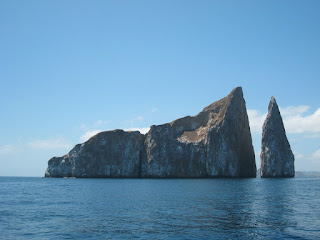
Continuing to slowly put up my Galapagos (work) Trip pics here is from when I went snorkeling around San Cristobal.




Subscribe to:
Posts (Atom)

